
FinTech Compliance Recruitment: How to Hire Compliance, AML and Risk Talent
Every FinTech, payments or crypto company reaches the point where compliance stops being a founder's side job. A licence application, a new banking partner or an audit finding usually forces the first dedicated hire, and regulators expect the right people to be in place before you scale.
This guide covers which compliance roles FinTech companies hire, in what order, how long it takes, what it costs, and how to choose a recruiter for compliance and risk roles.
Recruiting
November 11, 2026

Maiia
The short answer
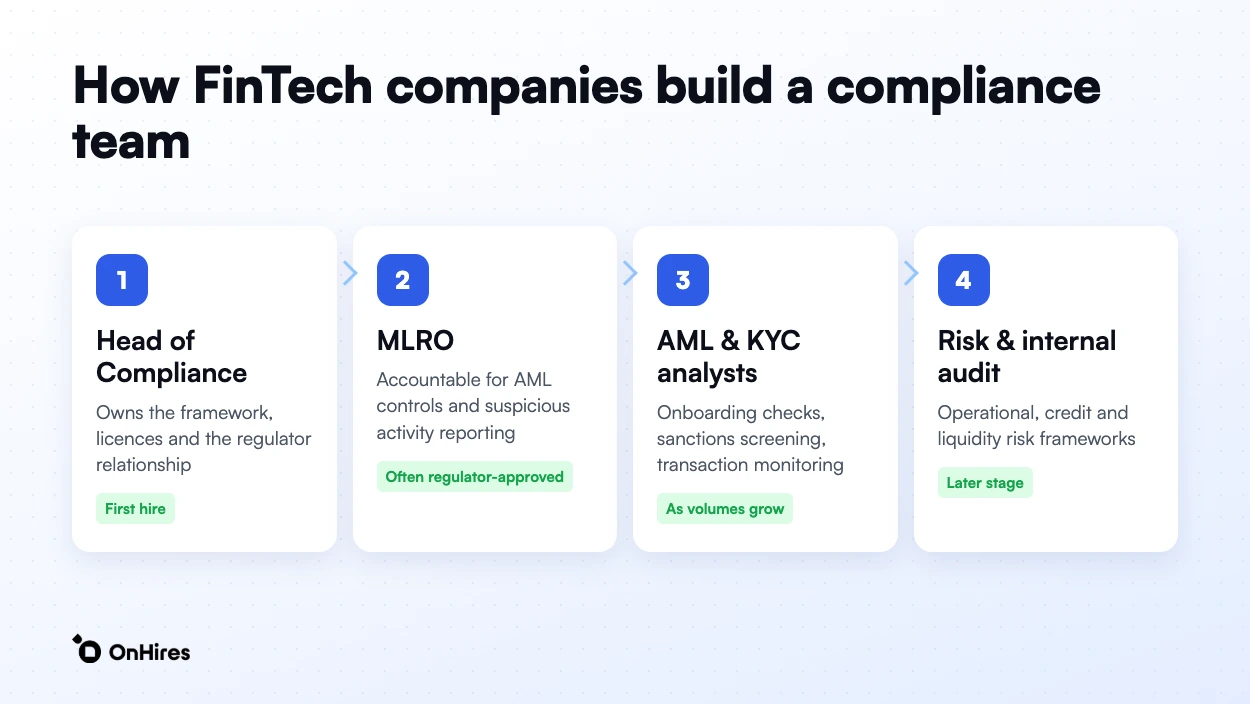
Most FinTech companies hire compliance in this order: a Head of Compliance or Compliance Officer who can own the licence and the regulator relationship, then a Money Laundering Reporting Officer (MLRO) where the regime requires one, then AML and KYC analysts to handle onboarding and transaction monitoring as volumes grow. Risk managers and internal audit follow later.
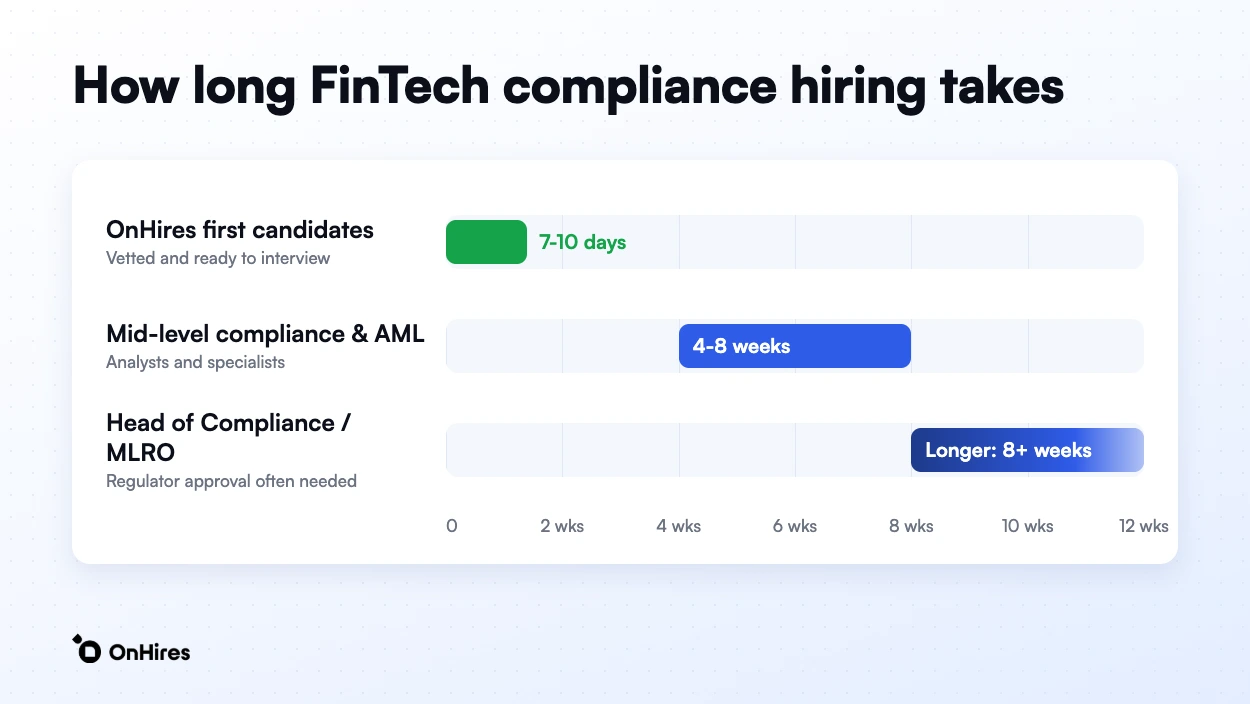
Through a specialist recruiter, first vetted compliance candidates usually arrive within one to two weeks. Mid-level compliance and AML roles close in four to eight weeks; senior roles such as Head of Compliance or MLRO take longer because regulators often need to approve the person. Agency fees on contingency are typically 20-30% of first-year base salary.
Which compliance roles FinTech companies hire
- Head of Compliance / Chief Compliance Officer: owns the compliance framework, licences and the regulator relationship.
- MLRO (Money Laundering Reporting Officer): accountable for anti-money laundering controls and suspicious activity reporting. In many European regimes this is an approved, named role.
- AML and KYC analysts: onboarding checks, enhanced due diligence, sanctions screening and transaction monitoring alerts.
- Financial crime and fraud specialists: fraud prevention, chargebacks and investigations, critical for payments and card issuing.
- Risk managers: operational, credit and liquidity risk frameworks for lending, payments and e-money firms.
- Regulatory compliance specialists: licence applications, policies, regulatory reporting and change management.
What makes compliance hiring hard
- Small, regulated talent pool. Experienced compliance people with FinTech or crypto backgrounds are few and rarely apply to job posts.
- Regulator approval. Senior roles often need fit-and-proper assessment, so the candidate's track record and licences matter as much as the CV.
- Local rules. A compliance officer in Lithuania, Malta or the UK works under different regulators than one in the US. You need people who know your jurisdiction.
- Timing. Licence deadlines and bank partner reviews do not wait for a three-month search.
How much does FinTech compliance recruitment cost?
On contingency, agencies usually charge 20-30% of the hire's first-year base salary. Retained search for a Head of Compliance or Chief Compliance Officer costs more and is paid in stages. If you need several compliance and engineering roles at once, a monthly recruitment subscription or RPO can cost less than separate per-hire fees. Ask every recruiter how long the free replacement guarantee lasts: a compliance hire who leaves mid-audit is expensive.
What to look for in a FinTech compliance recruiter
- Compliance-specific screening: regulators the candidate has worked with, licences held, audits and regulatory inspections handled.
- Jurisdiction knowledge: recruiters who know the EU, UK and US regimes and local notice periods.
- Speed to a shortlist that fits your licence or audit timeline.
- Ability to hire the rest of the team: engineering, product and finance roles often open at the same time.
How OnHires hires FinTech compliance teams
OnHires recruits compliance officers, MLROs, AML and KYC analysts, risk managers and financial crime specialists for FinTech, payments and crypto companies in the US and Europe, alongside the engineering and product roles these companies hire at the same time. You can work with us on pay-per-hire recruitment, a monthly subscription or RPO. First vetted candidates arrive within 7-10 days, the average time to fill is about three weeks, and every placement includes a 3-month free replacement. See also our FinTech recruitment page.
FAQ
How long does it take to hire a compliance officer for a FinTech company?
Usually four to eight weeks for mid-level roles, plus the candidate's notice period. Senior roles that need regulator approval take longer.
Should a FinTech startup hire an MLRO before launch?
If your licence or regime requires a named MLRO, yes: regulators expect the role to be filled before you onboard customers.
Can one recruiter hire both compliance and engineering roles?
Yes, if the agency recruits across functions. It keeps one process and one report for the whole hiring plan.
Is it better to hire compliance in-house or outsource it?
Many early-stage companies use an outsourced compliance consultant first and hire in-house once volumes, licences or bank partners require dedicated staff.