
Embedded Recruitment for Series A Startups: How to Hire 10-30 People After a Round
After a Series A, most startups need to hire 10-30 people in engineering, product and go-to-market within a year. Paying a separate agency fee for every hire gets expensive fast, and a first in-house recruiter takes months to find and ramp up.
Embedded recruitment sits in between: a dedicated recruiter and sourcer join your team for a fixed monthly fee and work on all open roles at once. This guide explains how it works and when it makes sense.
Recruiting
November 11, 2026

Maiia
The short answer
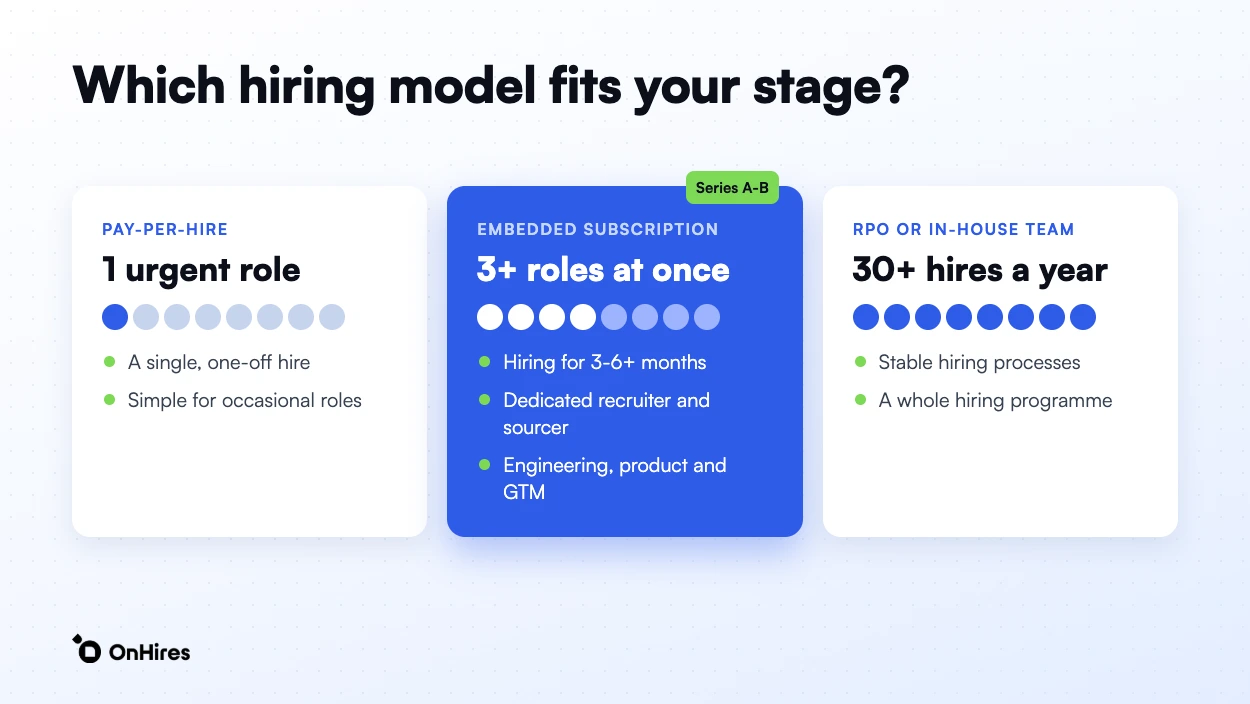
Embedded recruitment, also called a recruitment subscription or embedded talent partner, gives you a dedicated recruiter and sourcer who work inside your process for a fixed monthly fee instead of a fee per hire. It usually pays off when you have several open roles at the same time and plan to keep hiring for at least a few months, which describes most Series A and Series B startups.
For a single urgent hire, pay-per-hire is usually the better option. For a company hiring 30 or more people a year with stable processes, a larger RPO or an in-house team may fit better.
How embedded recruitment works
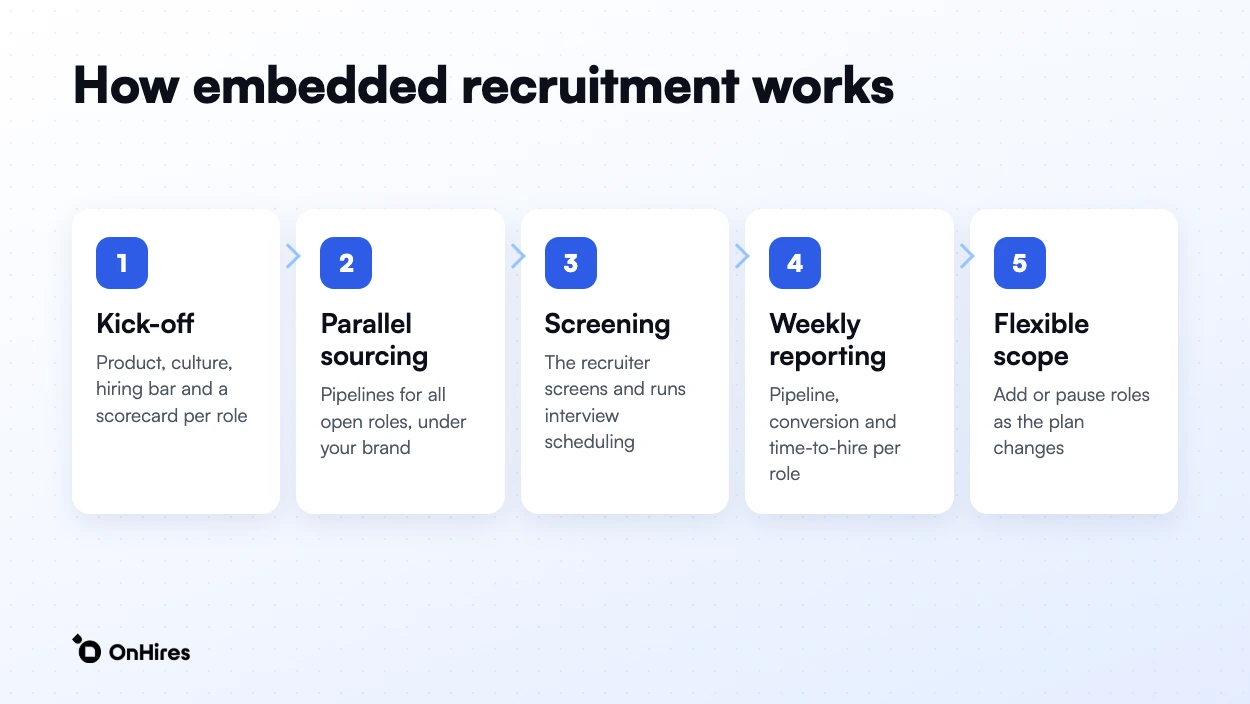
- Kick-off. The recruiter learns your product, culture and hiring bar, and agrees a scorecard for each role.
- Parallel sourcing. A sourcer builds pipelines for all open roles at once, using your brand and your tools.
- Screening and coordination. The recruiter screens candidates, schedules interviews and keeps hiring managers on track.
- Weekly reporting. You see the pipeline, conversion and time-to-hire for every role.
- Flexible scope. You can add or pause roles as the hiring plan changes.
When embedded recruitment beats per-hire agency fees
- You have three or more open roles at the same time.
- You expect to keep hiring for at least three to six months.
- You hire across engineering, product and GTM and want one partner for all of it.
- You want candidates to experience your brand, not an agency's.
With contingency fees of 20-25% of first-year salary, a startup making 15 hires a year quickly pays more in fees than a dedicated recruiter would cost each month.
What to ask before you sign
- Who exactly works on your roles, and how many other clients do they serve?
- What is the minimum term and notice period?
- How fast do the first candidates arrive?
- What reporting will you get, and how often?
- Is there a guarantee if a hire leaves early?
How OnHires runs embedded recruitment
With the OnHires recruitment subscription, a dedicated recruiter and sourcer work on all your open engineering, product and GTM roles for a fixed monthly fee, with weekly pipeline reports. First vetted candidates arrive within 7-10 days, the average time to fill is about three weeks, and every placement includes a 3-month free replacement. For one-off roles we also work on pay-per-hire, and for larger programmes on RPO.
FAQ
What is the difference between embedded recruitment and RPO?
Embedded recruitment usually means one or two dedicated recruiters working inside a startup's process. RPO is a broader outsourcing of the whole recruitment function, often for larger hiring volumes and longer contracts.
How many hires make a recruitment subscription worth it?
Usually three or more open roles at the same time, with hiring planned for at least a few months.
Can an embedded recruiter hire both engineers and sales people?
Yes. Running engineering, product and GTM hiring with one partner keeps one process and one report.
When should a startup hire its first in-house recruiter?
Usually when it has 10 or more open roles sustained for two or more quarters and the processes to support a full-time hire.