
Hiring Compliance Staff for MiCA-Licensed Crypto Companies in the EU
The EU's Markets in Crypto-Assets Regulation (MiCA) turned compliance from a nice-to-have into a licence condition for crypto-asset service providers (CASPs). To get and keep authorisation, a crypto company needs named, qualified people in compliance, anti-money laundering and risk, and many of them need to be in the EU.
This guide covers which roles MiCA-regulated crypto companies hire, how long it takes, and what to look for in a recruiter for crypto compliance.
Recruiting
November 11, 2026

Maiia
The short answer
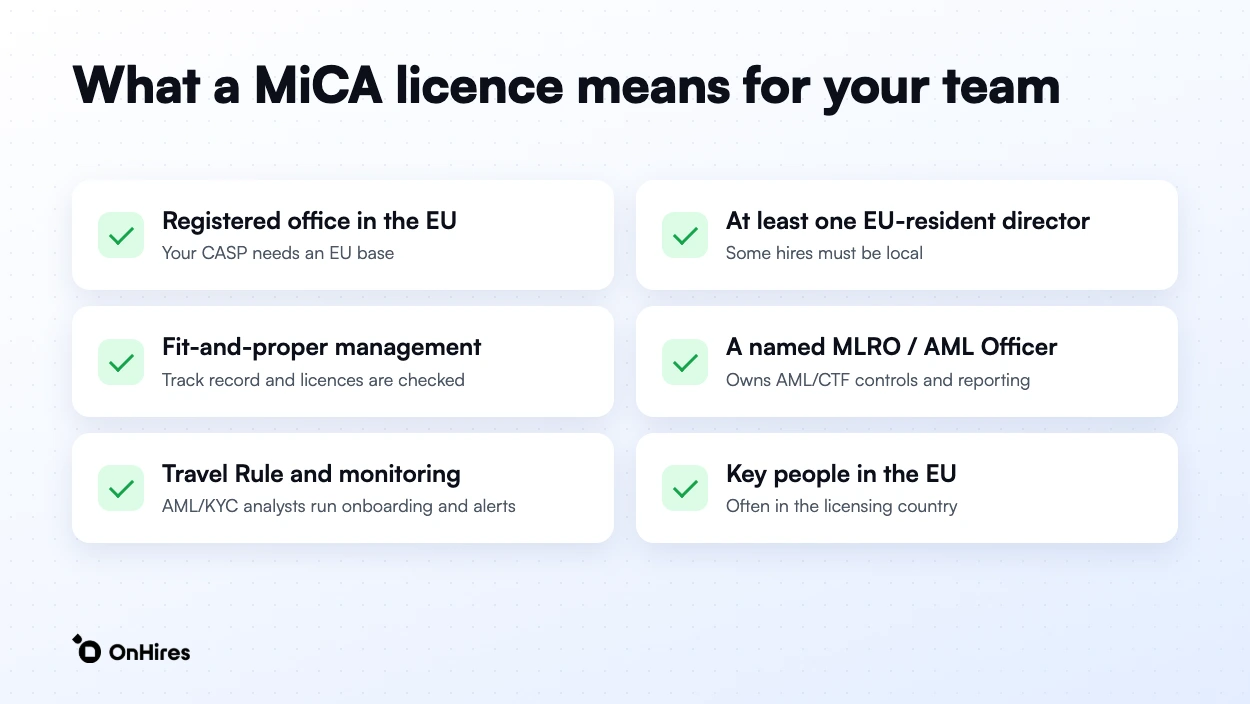
A crypto company applying for or holding a MiCA licence usually needs a Head of Compliance, an MLRO or AML officer, a risk manager, and AML/KYC analysts to run onboarding and transaction monitoring. MiCA requires CASPs to have a registered office in the EU and at least one director resident in the EU, and management must pass fit-and-proper checks, so some hires must be local and experienced.
Through a specialist recruiter, first vetted candidates usually arrive in one to two weeks. Mid-level AML and compliance roles close in four to eight weeks; senior, regulator-facing roles take longer.
Roles crypto companies hire under MiCA
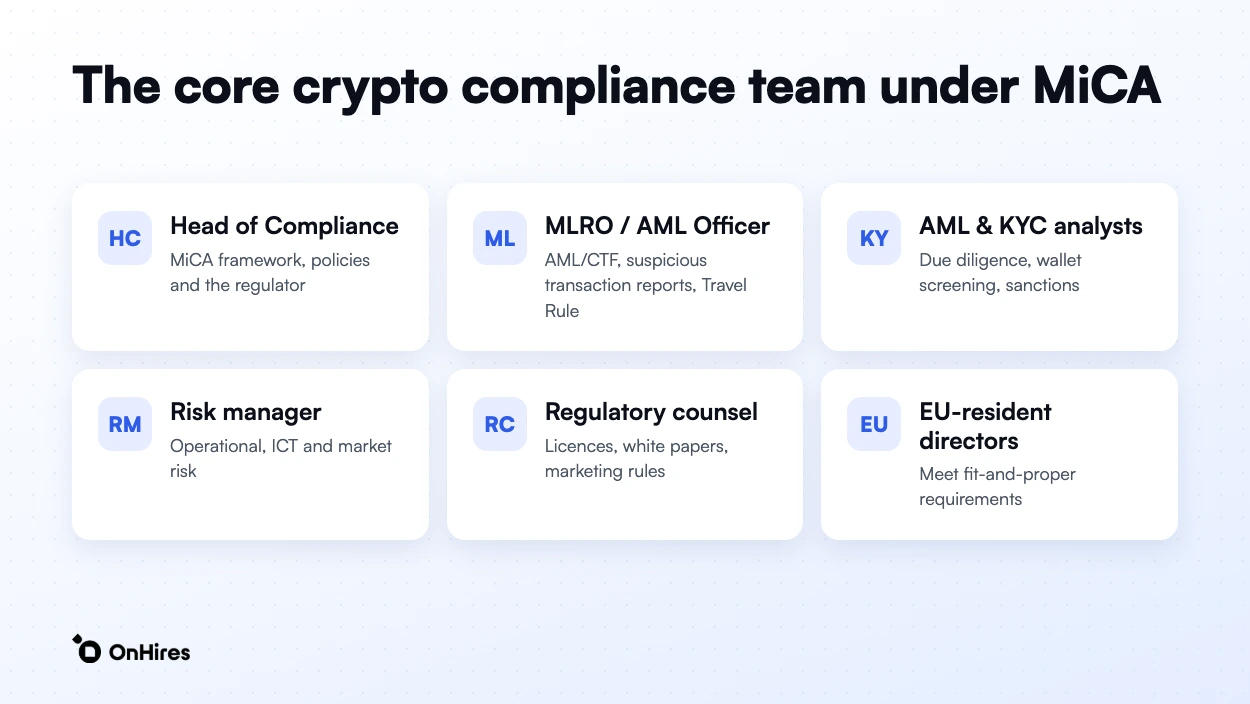
- Head of Compliance: owns the MiCA compliance framework, policies and the relationship with the national competent authority.
- MLRO / AML Officer: accountable for anti-money laundering and counter-terrorist financing controls, suspicious transaction reporting and the Travel Rule.
- AML and KYC analysts: customer due diligence, wallet screening, blockchain analytics alerts and sanctions checks.
- Risk manager: operational, ICT and market risk, safeguarding of client crypto-assets.
- Regulatory and legal counsel: licence applications, white papers, marketing rules and regulatory change.
- EU-resident directors and senior managers who can meet fit-and-proper requirements.
What makes crypto compliance hiring hard
- Two skill sets in one person. Good candidates understand both traditional AML regimes and on-chain tools such as blockchain analytics.
- Competition. Many CASPs are hiring for the same roles at once as transitional periods end.
- Location. Regulators expect key people to be in the EU, often in the licensing country.
- Reputation checks. Senior candidates look closely at the company's banking relationships and track record before joining.
What to look for in a crypto compliance recruiter
- Experience placing compliance and AML roles in crypto, payments or e-money firms.
- Knowledge of EU hiring markets: notice periods, local contracts and an Employer of Record if you have no entity.
- Screening that checks regulators, licences and audits the candidate has handled, not just keywords.
- Speed that matches your licence timeline, with weekly reporting.
How OnHires hires crypto and Web3 compliance teams
OnHires recruits Heads of Compliance, MLROs, AML and KYC analysts, risk managers and regulatory counsel for crypto, Web3 and FinTech companies in the EU, the UK and the US, together with the engineering and product roles they need. We work on pay-per-hire, a monthly subscription or RPO. First vetted candidates arrive within 7-10 days, the average time to fill is about three weeks, and every placement includes a 3-month free replacement. See also our Web3 recruitment and FinTech recruitment pages.
FAQ
Does a MiCA-licensed CASP need compliance staff in the EU?
Yes. MiCA requires a registered office in the EU and at least one EU-resident director, and regulators expect key compliance functions to be run by qualified people they can reach.
How long does it take to hire an MLRO for a crypto company?
Usually six to ten weeks including regulator-facing checks, plus the candidate's notice period.
Can a crypto company hire in the EU without its own entity?
For many roles, yes, through an Employer of Record. Senior licence-holding roles may still need a local entity, depending on the regulator.
What should a crypto AML analyst know?
KYC and due diligence, sanctions screening, transaction monitoring, and blockchain analytics tools used to trace wallets and flag risky flows.