
Talent Acquisition & Management Template
Hiring the right people requires more than just posting job descriptions and conducting interviews. Without a clear hiring structure, teams often struggle with inconsistent candidate evaluation, unclear role expectations, and slow hiring decisions. The OnHires Talent Acquisition & Management Template provides a complete framework for organizing and managing the hiring process in one place. Based on best practices from the hiring methodology presented in Who: The A Method for Hiring by Geoff Smart and Randy Street, this template helps teams build a structured system for defining roles, evaluating candidates, and running an efficient hiring pipeline.
Get the Hiring Template

Yulia

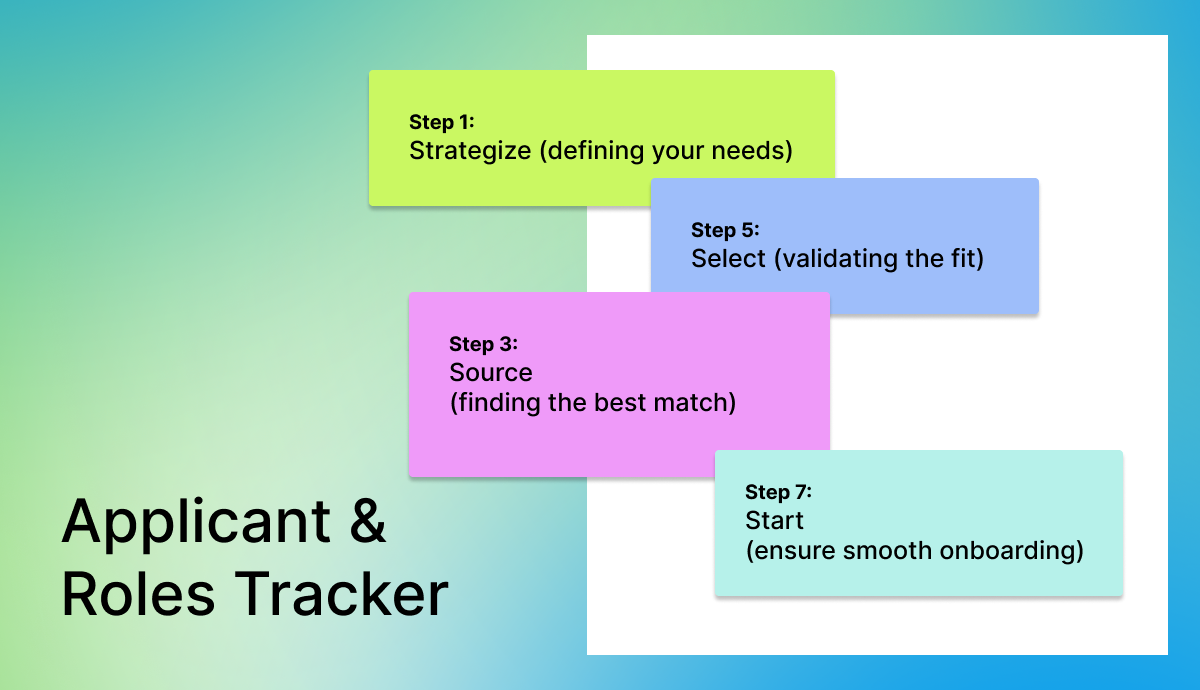
The template guides teams through the key stages of building a strong hiring process.
Inside the system you will find structured sections for:
Strategizing your hiring needs
Before opening a role, teams define hiring priorities, clarify expectations, and align hiring goals with company growth plans.
Defining the ideal candidate
The template includes scorecards to identify the skills, competencies, and traits needed for success in a role. This allows hiring teams to evaluate candidates consistently.
Organizing hiring pipelines
Use built-in tables to track roles, applicants, interviewers, and hiring decisions in one structured workspace.
Sourcing candidates
The framework helps teams combine inbound applicants with proactive sourcing strategies such as referrals, networking, and recruiter partnerships.
Running structured interviews
Instead of unstructured conversations, the template supports a clear interview process including screening calls, structured interviews, and reference checks.
Closing candidates and onboarding
Hiring does not end with an offer. The template also helps teams prepare for onboarding and long-term employee success.
This system is particularly useful for:
• Startups building their first structured hiring process
• Scaling companies hiring multiple roles simultaneously
• Hiring managers organizing interview workflows
• Recruitment teams improving consistency in candidate evaluation
“Great hiring is not luck — it’s a structured process.”
When teams implement a clear hiring framework:
• Roles and expectations become clearer
• Candidates are evaluated more objectively
• Hiring decisions become faster
• Teams collaborate better during recruitment
Instead of relying on fragmented documents, spreadsheets, and messages, companies gain a centralized hiring system.
The result is a more organized recruitment process and stronger hiring outcomes.
.svg)
.svg)







.webp)


.webp)


